


1. Name
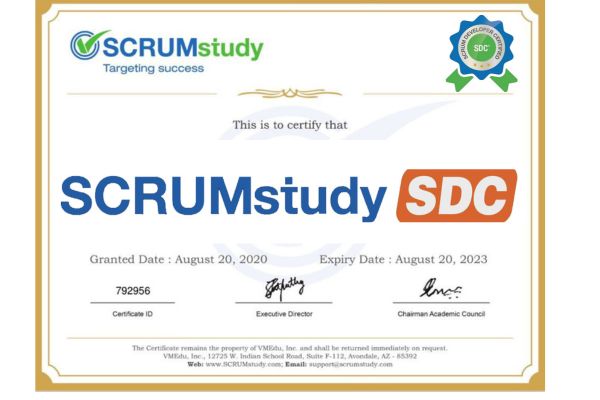
- Scrum Developer Certified (SDC®).
2. What you will learn
- Fundamental principles and concepts of the Scrum framework.
- Practical working knowledge of Scrum roles, meetings, and artifacts.
- How to effectively contribute as a member of a Scrum Team.
- Preparation for the SDC® certification exam.
3. Audience Profile
- Scrum Team members (developers).
- Anyone who interacts with a Scrum Team.
- Individuals interested in understanding the basics of Scrum and its effective implementation.
4. Prerequisites
- There are no formal prerequisites. However, it is preferable to complete the Scrum Fundamentals Certified (SFC™) certification and training first.
5. Exam Format
- Type: Multiple choice.
- Questions: 75 questions.
- Duration: 90 minutes.
- Delivery: Proctored online exam.
- Scoring: No negative marks for wrong answers.
- Current Pass Rate: 95%.
6. Course Outcomes
- Ability to recognize, define, and navigate the Scrum Framework.
- Readiness to create deliverables within a Scrum Team.
- Capability to anticipate and resolve issues related to practical Scrum implementation.
- Attainment of the "Scrum Developer Certified" certificate upon passing the exam.
7. Course Methodology
- Engaging & Interactive: Focuses on high retention through hands-on practice.
- Practical Application: Uses role-plays and case studies to simulate real-world product development.
- Internalization: Encourages students to work through concepts rather than just listening.
8. Course Outline
1. Introduction: Overview, Principles, Aspects, Processes, and Advantages.
2. Scrum Roles: Core and Non-core roles (Product Owner, Master, Team).
3. Business Justification: Techniques, evaluation, and value planning.
4. Quality: Quality management, continuous integration, and sustainable pace.
5. Change: Managing change requests and flexibility within Sprints.
6. Risk: Identification, assessment, and mitigation.
7. Scrum Phases: Initiate, Plan & Estimate, Implement, Review & Retrospect, and Release.
9. About Institution
- SCRUMstudy™ is the global accreditation body for Scrum and Agile certifications. They authored the SBOK® Guide (A Guide to the Scrum Body of Knowledge) and operate through a large global network of Authorized Training Partners (A.T.P.s) to deliver professional certifications ranging from entry-level to expert.